Guides · Okeechobee, Florida
Okeechobee's Economy: The Industry That Built the Town
Big Water, Small Depth: Why the Lake Shaped Work, Not Just Views
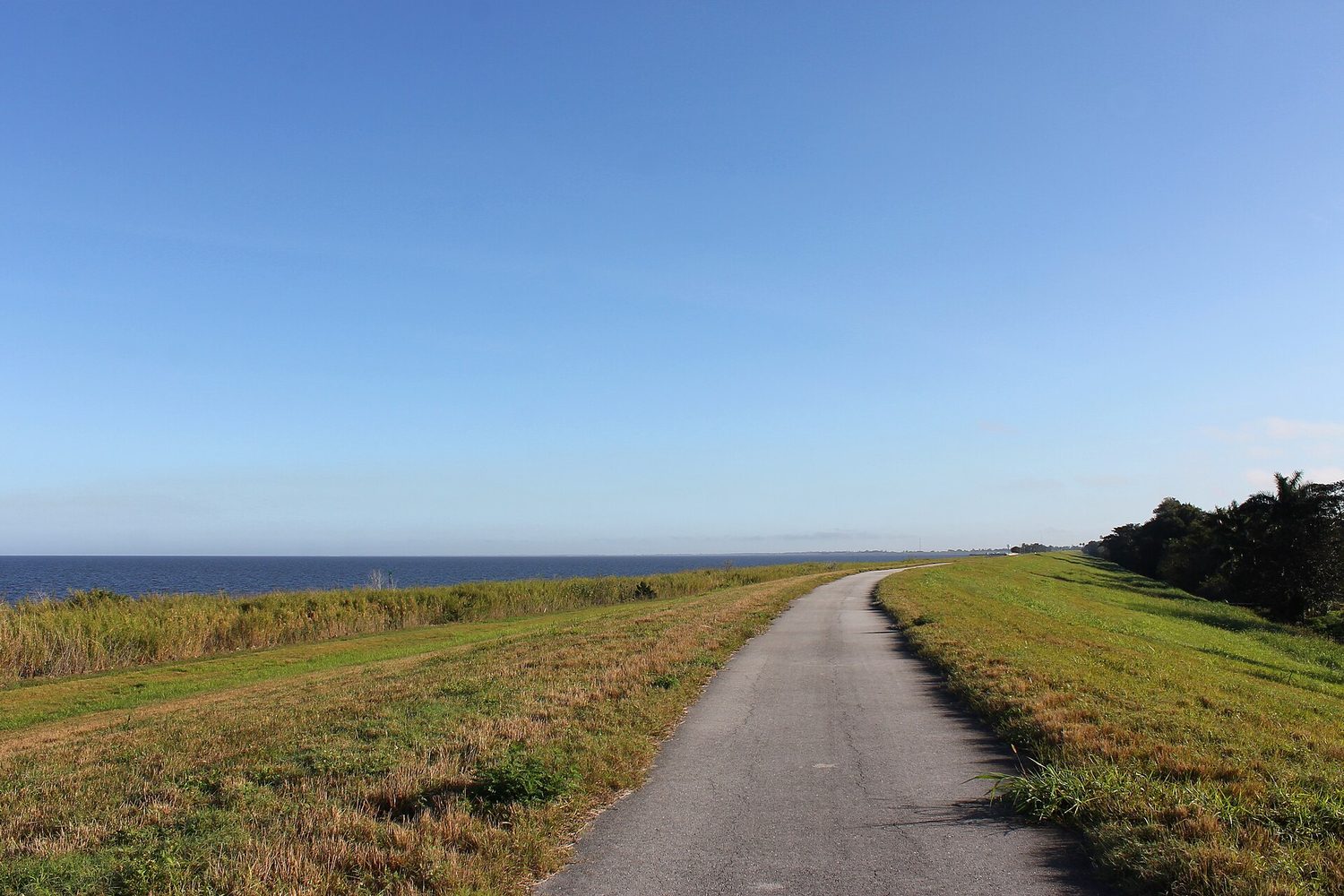
Seven hundred and thirty square miles is hard to hold in your head. Roughly the size of a small county. But the lake’s average depth of nine feet is what matters. That shallow, fertile water—warmed by the Florida sun and fed by the Kissimmee River chain—supported fish populations thick enough to be a commercial industry and a supply of water reliable enough to irrigate winter vegetables that the rest of the country could not grow in January.
The lake was never a postcard. It was a resource: a fishery, an irrigation source, a shipping lane. The town that took its name from the water took its character from the work the water made possible.
The Name and the Wall: How Okeechobee Got Its Identity
The name goes back to the Hitchiti language, the ancestral tongue of most Florida Seminoles: oki, water, and chubi, big. Big water. That is what the people who lived here called it, and that is what it is.
But big water can turn deadly. The 1928 Okeechobee Hurricane—the first recorded Category 5 hurricane in the North Atlantic—severely damaged the lake area and killed thousands. The storm pushed the shallow lake over its southern shore, and the death toll was staggering, with many victims never identified or counted.
The aftermath changed the lake forever. The federal government built the Herbert Hoover Dike, a 40-foot wall of earth and rock ringing the lake, to make sure that water stayed put. The dike’s latest rehabilitation was completed in January 2023. The lake is not wild water anymore. It is managed water, held behind a wall, and that management is part of the town’s everyday reality.
Okeechobee's 1930s Boom: Vegetables, Bullfrogs, and Railcars
By the 1930s, Okeechobee was a shipping hub. The area was sending hundreds of train cars of winter vegetables a year to northern markets—produce grown in the black muck soil around the lake that would not have been possible without the water. Alongside the vegetable trains, the local economy included poultry farms, catfish operations, and a bullfrog breeding industry.
That is not a resort economy. That is an agricultural and aquaculture economy, and it put Okeechobee on the map for reasons that had nothing to do with vacation rentals. The railcars rolled out of town full of food, and the money came back with them. The work was physical, seasonal, and tied to the lake and the land around it.
Okeechobee's History: Battlefield, Festival, and Town Roots
Okeechobee’s history runs deeper than the hurricane and the vegetables. On 25 December 1837, Seminole forces met US troops under Zachary Taylor at the Okeechobee Battlefield, one of the largest battles of the Second Seminole War. It was fought in the swamps and hammocks around the lake, and it is a reminder that this ground was contested long before the town existed.
The town itself was incorporated on 4 June 1915. Half a century later, in 1965, the Speckled Perch Festival and Parade began as a way to honor the fishing industry—a parade and a fish fry in Flagler Park at the height of tourist season. The Saturday parade still steps off at 10am. It is the oldest celebration in Okeechobee, and it is not a chamber-of-commerce invention. It grew out of the fishing industry that was already at the heart of the town.
Okeechobee Today: A Working Town, Not a Resort
Run the numbers on Okeechobee today and the picture is clear. Population: 5,376 people. Median age: 37.7. Median household income: $50,365. Median home value: $187,400. Median gross rent: $1,008.
The telling numbers are the housing ones. Total housing units: 1,983. Homes held for seasonal or recreational use: 0. Vacant units: 177. That means nobody is buying a second home here to escape the winter. The houses that exist are lived in year-round.
Unemployment is at 4 percent, which is not a retirement community number—it is a working town number. And 20.5 percent of residents hold a bachelor’s degree or higher, which is modest by national standards and points to a workforce that is not built around white-collar tourism.
The town is 41 miles from Stuart, where the boat show draws a crowd, and 44 miles from Sebastian, home of the Clambake Lagoon Festival. Those are towns with event economies. Okeechobee’s economy was built on work—on vegetables, fish, and the water that made both possible—and the census suggests it has not drifted far from that foundation.
Okeechobee was never a resort pretending to be a farm town. It was always the other way around. The lake is big, but it is shallow, and the people who settled here figured out how to work it rather than just look at it. The dike keeps the water in, the trains kept the vegetables moving, and the town kept working. It still does.
Common questions
- What is the meaning of the name Okeechobee?
- Okeechobee comes from the Hitchiti words oki (water) and chubi (big), the ancestral language of most Florida Seminoles. It literally means 'big water,' which fits perfectly since the lake is 730 square miles.
- How big is Lake Okeechobee?
- Lake Okeechobee is the eighth-largest natural freshwater lake in the U.S. and the largest entirely within the contiguous 48 states. It covers 730 square miles but averages only nine feet deep, so it's vast but shallow.
- What happened during the 1928 hurricane?
- The 1928 Okeechobee Hurricane was the first recorded Category 5 hurricane in the North Atlantic. It severely damaged the lake area and killed thousands of people. That tragedy led to building the Herbert Hoover Dike, which was rehabilitated and completed in January 2023.
- What industries built Okeechobee historically?
- By the 1930s, Okeechobee shipped hundreds of train cars of winter vegetables annually, plus poultry, catfish, and even a bullfrog breeding industry. Fishing was also key, celebrated by the Speckled Perch Festival since 1965.
- When was Okeechobee incorporated?
- Okeechobee was incorporated on June 4, 1915. It's a small town today with a population of 5,376 people and a median age of 37.7 years.
- What is the Okeechobee Battlefield?
- The battlefield marks the December 25, 1837 battle where Seminole forces fought U.S. troops under Zachary Taylor during the Second Seminole War. It was one of the largest battles of that conflict and is a key historical site near the lake.
Every business named above is one we hold a listing for, and every date traces to a source on our sources page. We do not describe menus, interiors or service we have not verified. Details change — confirm before you travel.