Guides · Okeechobee, Florida
Living in Okeechobee, FL: What to Know
Okeechobee is not a lakefront resort town. It is a working, flood-walled city whose identity is tied to the water's danger and its harvest. Living here means accepting that the lake is both livelihood and threat.
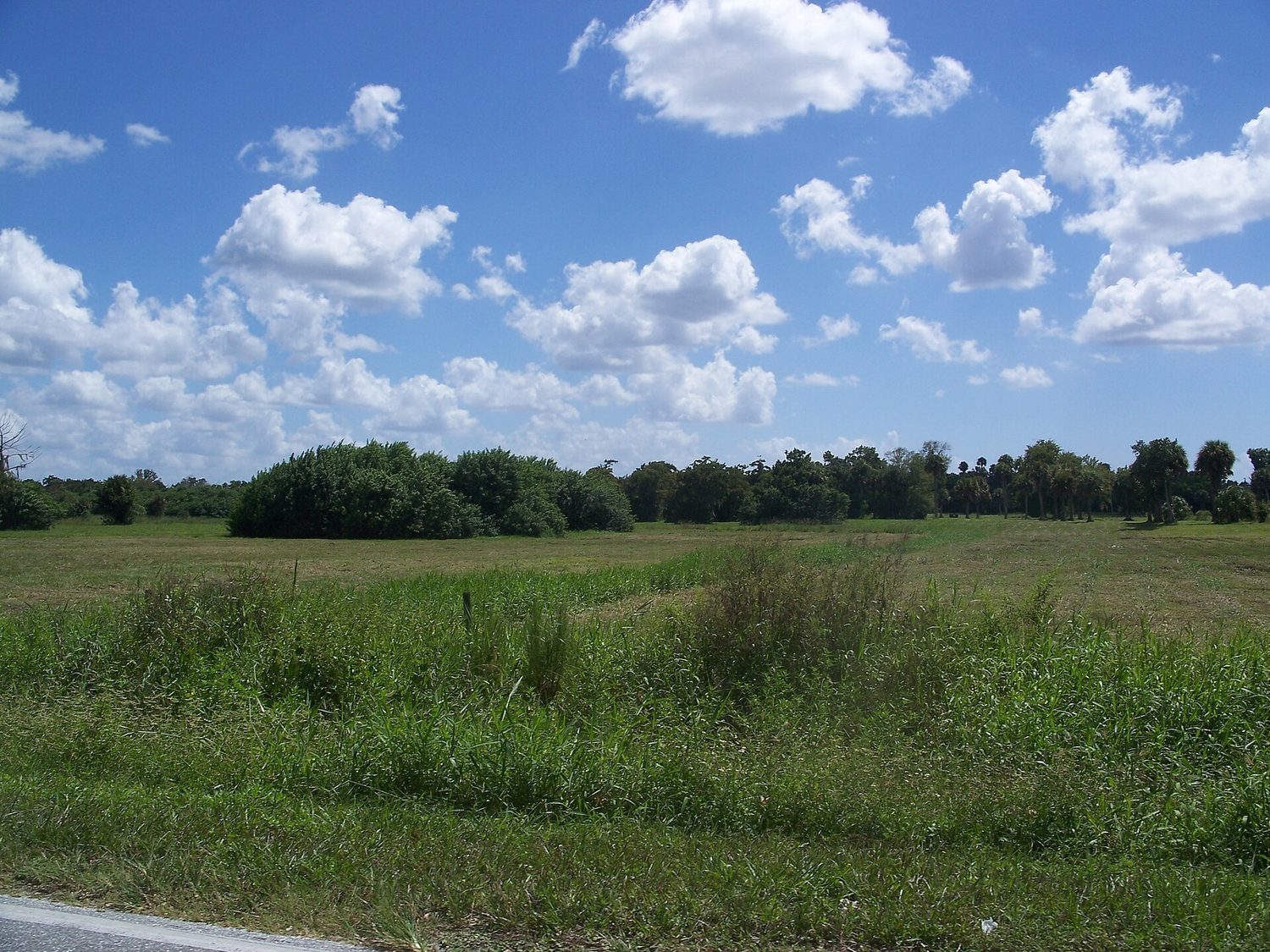
Lake Okeechobee: The Heart of the Town
The name comes from Hitchiti, the ancestral language of most Florida Seminoles: oki, water, and chubi, big. Big water. That is the plain fact of the place. Lake Okeechobee is the eighth-largest natural freshwater lake in the fifty states and the largest contained entirely within the contiguous forty-eight—730 square miles at an average depth of just nine feet. It is not a postcard. It is a shallow inland sea that can turn violent, and the town that shares its name sits behind a 40-foot earthen wall.
The Herbert Hoover Dike rings the lake, built after the 1928 hurricane. Its latest rehabilitation completed in January 2023. It is not scenery—it is infrastructure that makes daily life possible. Residents do not look at the lake the way tourists do. They look at it the way farmers look at the sky: with use, with respect, and with a weather eye.
Okeechobee's History: Hurricanes and Seminole Wars
Okeechobee was incorporated on 4 June 1915, but the ground beneath it was fought over long before that. On 25 December 1837, Seminole forces met US troops under Zachary Taylor at the Okeechobee Battlefield in one of the largest battles of the Second Seminole War. The lake was not a backdrop then; it was cover, supply line, and refuge.
Then came the 1928 Okeechobee Hurricane, the first recorded Category 5 hurricane in the North Atlantic. It severely damaged the lake area, and the death toll ran into the thousands, many of them drowned when the old muck dike failed. The Herbert Hoover Dike exists because of that failure. The town rebuilt, and the dike became the horizon.
Okeechobee Demographics and Housing Costs
The census figures tell a story of a permanent community, not a vacation colony. Okeechobee has a population of 5,376 people, with a median age of 37.7 years. Of the 1,983 total housing units, exactly zero are held for seasonal or recreational use. These are homes, not second homes. Vacant units number 177, which is a tight market.
The median home value is $187,400, and the median gross rent is $1,008 a month. Median household income sits at $50,365, and the unemployment rate is 4 percent. About 20.5 percent of residents hold a bachelor's degree or higher. This is a working town with working prices—more affordable than the coast, and less frantic.
Jobs and Economy in Okeechobee
By the 1930s, the area was shipping hundreds of train cars of winter vegetables a year, alongside poultry farms, catfish operations, and a bullfrog breeding industry. That agricultural backbone still shapes the economy, and the lake's fishing industry remains central to the town's identity. Guiding, tackle, fish camps, and commercial hauling all depend on the same nine feet of water.
The Speckled Perch Festival and Parade has honored that fishing industry since 1965, beginning with a parade and a fish fry in Flagler Park at the height of tourist season. It is the oldest celebration in Okeechobee, and it is not a contrived event—it grew out of what people here actually do.
Jobs here are tied to the water, the fields, and the services that support both. Agriculture, fishing, and related trades dominate, with retail and healthcare filling out the rest. It is not a commuter suburb, and it is not a retirement enclave. It is a place where work is visible and the lake is the boss.
Living with the Herbert Hoover Dike
Living in Okeechobee means living with a 40-foot wall of earth between you and 730 square miles of water that averages nine feet deep. That depth is the problem: a shallow lake catches wind, and wind builds waves that can erode and overtop. The dike is not a quaint feature. It is a constant companion, maintained, patrolled, and trusted only as far as it has been tested.
Residents balance respect and use. They fish, they boat, they flood the fields, and they keep an ear on the radio when storms roll in. The lake is livelihood and threat in equal measure, and the town does not pretend otherwise. That is not fear—it is knowledge passed down through generations, some of whom lost family in 1928.
Is it safe? The dike's rehabilitation completed in January 2023, and the engineering is modern. But safety here is a matter of preparation, not assumption. The town exists because of the water, and the water has killed people before. Residents live with that bargain.
Day Trips and Nearby Escapes
Okeechobee is a base, not a destination. For variety, nearby towns offer different flavors without requiring a full relocation.
| Measure | Value |
|---|---|
| Population | 5,376 |
| Median age | 37.7 years |
| Total housing units | 1,983 |
| Seasonal/recreational units | 0 |
| Vacant housing units | 177 |
| Median home value | $187,400 |
| Median gross rent | $1,008 |
| Median household income | $50,365 |
| Unemployment rate | 4% |
| Bachelor's degree or higher | 20.5% |
Stuart, 41 miles east, hosts the Stuart Boat Show and offers a coastal, marine-oriented economy. Sebastian, 44 miles away, has the Sebastian Clambake Lagoon Festival, a different kind of water culture on the Atlantic side. Further out, Arcadia (71 miles) runs the Arcadia All-Florida Championship Rodeo, Oviedo (101 miles) has Great Day in the Country, Everglades City (103 miles) holds the Everglades Seafood Festival, and Altamonte Springs (105 miles) does Red Hot & Boom for the Fourth.
None of those towns are Okeechobee. They are escapes, not replacements. The lake town is its own thing: flat, working, and honest about what the water demands. If you come for the fishing, the harvest, or the quiet, you will understand. If you come for a postcard, you will be standing behind a wall, looking at water that does not care.
Common questions
- What is Lake Okeechobee's size and depth?
- Lake Okeechobee is the eighth-largest natural freshwater lake in the U.S. and the largest entirely within the contiguous 48 states. It covers 730 square miles with an average depth of just nine feet. That shallow, vast water is why the Herbert Hoover Dike surrounds it.
- When was Okeechobee founded?
- Okeechobee was incorporated on June 4, 1915. The name comes from the Hitchiti language, meaning 'big water' (oki for water, chubi for big). That heritage is part of the town's identity, especially tied to the Seminole history in the area.
- What happened in the 1928 hurricane?
- The 1928 Okeechobee Hurricane was the first recorded Category 5 hurricane in the North Atlantic. It severely damaged the lake area and killed thousands. The 40-foot Herbert Hoover Dike was built after that storm, with its latest rehabilitation completed in January 2023.
- Is there a historic battlefield nearby?
- Yes, the Okeechobee Battlefield is where on December 25, 1837, Seminole forces fought U.S. troops under Zachary Taylor. It was one of the largest battles of the Second Seminole War. You can visit the site and reflect on that history.
- What's the oldest festival in Okeechobee?
- The Speckled Perch Festival and Parade, running since 1965, is the oldest celebration. It began to honor the fishing industry with a parade and fish fry in Flagler Park. The Saturday parade still steps off at 10 a.m. during the tourist season.
- What's the local economy like today?
- In the 1930s, the area shipped hundreds of train cars of winter vegetables yearly, plus poultry, catfish, and bullfrog operations. Today, the median household income is $50,365, unemployment is 4%, and 20.5% of residents hold a bachelor's degree or higher. The median home value is $187,400.
Every business named above is one we hold a listing for, and every date traces to a source on our sources page. We do not describe menus, interiors or service we have not verified. Details change — confirm before you travel.