Guides · Okeechobee, Florida
What People Get Wrong About Okeechobee, FL
Okeechobee is not a postcard town, and the lake that names it is not a backdrop—it is a working, dangerous, and storied piece of water that demands respect.
The Name Is Not a Joke
People hear “Okeechobee” and stumble over the syllables. The word is Hitchiti, the ancestral language of most Florida Seminoles: oki, water, and chubi, big. Big water. That is not a translation for tourists; it is a description of the eighth-largest natural freshwater lake in the fifty states, and the largest contained entirely within the contiguous forty-eight. Seven hundred and thirty square miles at an average depth of just nine feet. That shallowness is the whole story. Wind can move that water fast, and the lake has never cared much for human schedules.
The town itself was incorporated on 4 June 1915. Before that, the ground was swamp and pasture and Seminole trails. By the 1930s, the area was shipping hundreds of train cars of winter vegetables a year, alongside poultry farms, catfish operations and a bullfrog breeding industry. That is the foundation—not citrus, not golf, not retirement. Okeechobee grew because the land and the lake could be worked.
The Dike Is Not Scenery
The Herbert Hoover Dike rings the lake at forty feet. It was built after the 1928 Okeechobee Hurricane, the first recorded Category 5 hurricane in the North Atlantic, which severely damaged the lake area. That storm killed thousands of people, many of them Black farmworkers whose bodies were buried in mass graves. The dike is a scar that became a structure, and its latest rehabilitation completed in January 2023. When you drive along it, you are not looking at a levee for aesthetic reasons. You are looking at the hard answer to a question nobody should forget.
The lake is not a swimming hole. It is not a postcard. It is a shallow, wind-driven body of water that has killed people who underestimated it. The dike is the reason the town exists in its current form, and the reason it can keep existing.
The Battlefield Is Older Than the Town
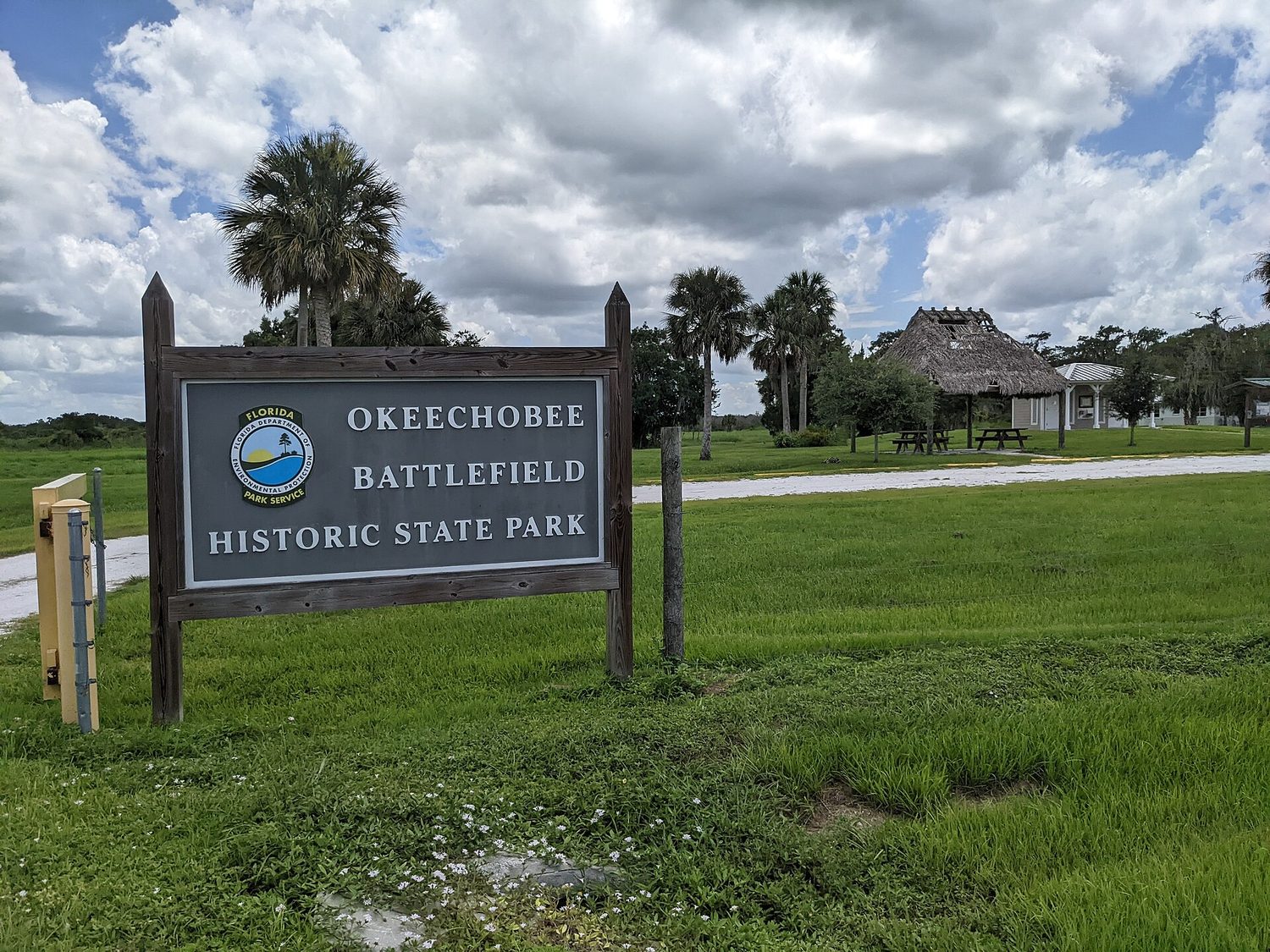
Before the town, before the dike, before the vegetables, there was the Okeechobee Battlefield. On 25 December 1837, Seminole forces met US troops under Zachary Taylor in one of the largest battles of the Second Seminole War. That is not a footnote. That is the ground the town stands near. The Seminoles did not lose that fight in any simple way, and the war dragged on for years after. When people talk about Florida history as if it started with air conditioning, they are skipping the part where the land was fought over, bloodily, by people who were here first.
The battlefield is not a theme park. It is a place where the stakes were life and the outcome was complicated. You can stand there and feel the flatness of the land, the way the sawgrass and the water stretch out, and understand why Taylor’s troops struggled. The Seminoles knew the ground. That mattered.
The Numbers Tell a Different Story
The census figures for Okeechobee do not look like a resort town. Total housing units: 1,983. Homes held for seasonal or recreational use: 0. Zero. Nobody is buying a second home here to escape the winter. Vacant housing units: 177. Median home value: $187,400. Median gross rent: $1,008. Median household income: $50,365. Unemployment rate: 4 percent. Bachelor’s degree or higher: 20.5 percent. Population: 5,376. Median age: 37.7 years.
Those numbers describe a working town. People live here year-round, not seasonally. They work in agriculture, in trades, in the businesses that serve the lake and the land. The lack of seasonal housing is not a deficiency; it is a statement. Okeechobee is not a place you visit for a week and leave. It is a place you live, or you do not come at all.
The Festival Is Not a Gimmick
The Speckled Perch Festival and Parade is the oldest celebration in Okeechobee. It began by honouring the fishing industry with a parade and a fish fry in Flagler Park at the height of the tourist season. The Saturday parade still steps off at 10am. The date of its founding is a matter of public record, but the point is not the anniversary. The point is that the festival is about fish, not fireworks, not shopping, not a generic “community day.” It is about the lake and the people who make a living from it.
What People Get Wrong
The biggest mistake is treating Okeechobee as a gateway to somewhere else. It is not a pit stop on the way to the coast. It is not a cheaper place to sleep before you drive to Stuart, which is 41 miles away, or Sebastian, 44 miles away, or Arcadia, 71 miles away. Those towns have their own events—the Stuart Boat Show, the Sebastian Clambake Lagoon Festival, the Arcadia All-Florida Championship Rodeo—but Okeechobee is not their suburb.
The second mistake is treating the lake as a pretty backdrop. It is not. It is a working body of water with a history of violence, both natural and human. The 1928 hurricane is not a historical footnote; it is a warning that remains relevant. The dike is not an eyesore; it is a necessity.
The third mistake is assuming that a town with no seasonal housing and a median income of $50,365 has nothing to offer. That is a prejudice, not a fact. Okeechobee has a history that predates the state of Florida as we know it, a working economy that feeds people, and a festival that has outlasted every trend in Florida tourism. It is not a paradise. It is not a hidden gem. It is a real place, and that is worth more than a postcard.
Common questions
- How big is Lake Okeechobee?
- Lake Okeechobee is the eighth-largest natural freshwater lake in the U.S. and the largest entirely within the contiguous 48 states. It covers 730 square miles but averages only nine feet deep, so it's vast but shallow.
- What happened in the 1928 hurricane?
- The 1928 Okeechobee Hurricane was the first recorded Category 5 hurricane in the North Atlantic. It severely damaged the lake area and killed thousands. The Herbert Hoover Dike was built afterward to protect against future flooding.
- Is Okeechobee a good place to live?
- Okeechobee has a population of 5,376 with a median age of 37.7. The median home value is $187,400, median gross rent is $1,008, and the unemployment rate is 4%. About 20.5% of residents hold a bachelor's degree or higher.
- What is there to do in Okeechobee?
- The Speckled Perch Festival and Parade, running since 1965, is the oldest celebration in town. It honors the fishing industry with a parade and fish fry in Flagler Park. Nearby towns like Stuart and Sebastian offer boat shows and festivals within 44 miles.
- How did Okeechobee get its name?
- Okeechobee comes from the Hitchiti language, spoken by most Florida Seminoles. It combines 'oki' meaning water and 'chubi' meaning big, so the name literally means 'big water'.
- What is the history of Okeechobee?
- Okeechobee was incorporated on June 4, 1915. By the 1930s, it shipped hundreds of train cars of winter vegetables yearly, plus poultry, catfish, and bullfrog operations. The Okeechobee Battlefield marks a major 1837 Seminole War battle.
Every business named above is one we hold a listing for, and every date traces to a source on our sources page. We do not describe menus, interiors or service we have not verified. Details change — confirm before you travel.